Four steps to verified authenticity
A transparent process from submitting a request to public verification by a unique number.
Registration
Upload photos of the autograph and its provenance history in your dashboard.
Blind appraisal
An independent expert assesses the autograph without any information about the owner.
COA certificate
A verified autograph receives a certificate and an expert report with a QR code.
Public verification
Anyone can verify authenticity by the autograph ID in the open registry.
Public registry
Anyone can check an autograph by its unique ID and see the verification status and provenance.
Appraisal
Independent experts carry out a “blind” assessment from photos and give a decision with comments.
COA certificate
Verified autographs receive a digital certificate of authenticity with a QR code.
The same protection as banknotes and notarial forms
Every certificate carries several independent levels of authenticity checks.
Guilloche pattern
Microlines, microtext and a security mesh, as on banknotes — on every certificate.
QR with direct verification
The QR code leads straight to the certificate and report page in the registry — no intermediaries.
Blind appraisal
The expert assesses the autograph without knowing the owner — the decision is free from bias.
Unalterable history
The issue date, appraisal level and report are recorded in the documents and cannot be edited.
Certificate and expert report
A verified autograph receives two documents: a certificate of authenticity in a guilloche frame with a QR code, and a separate expert report describing the examination. Samples below.
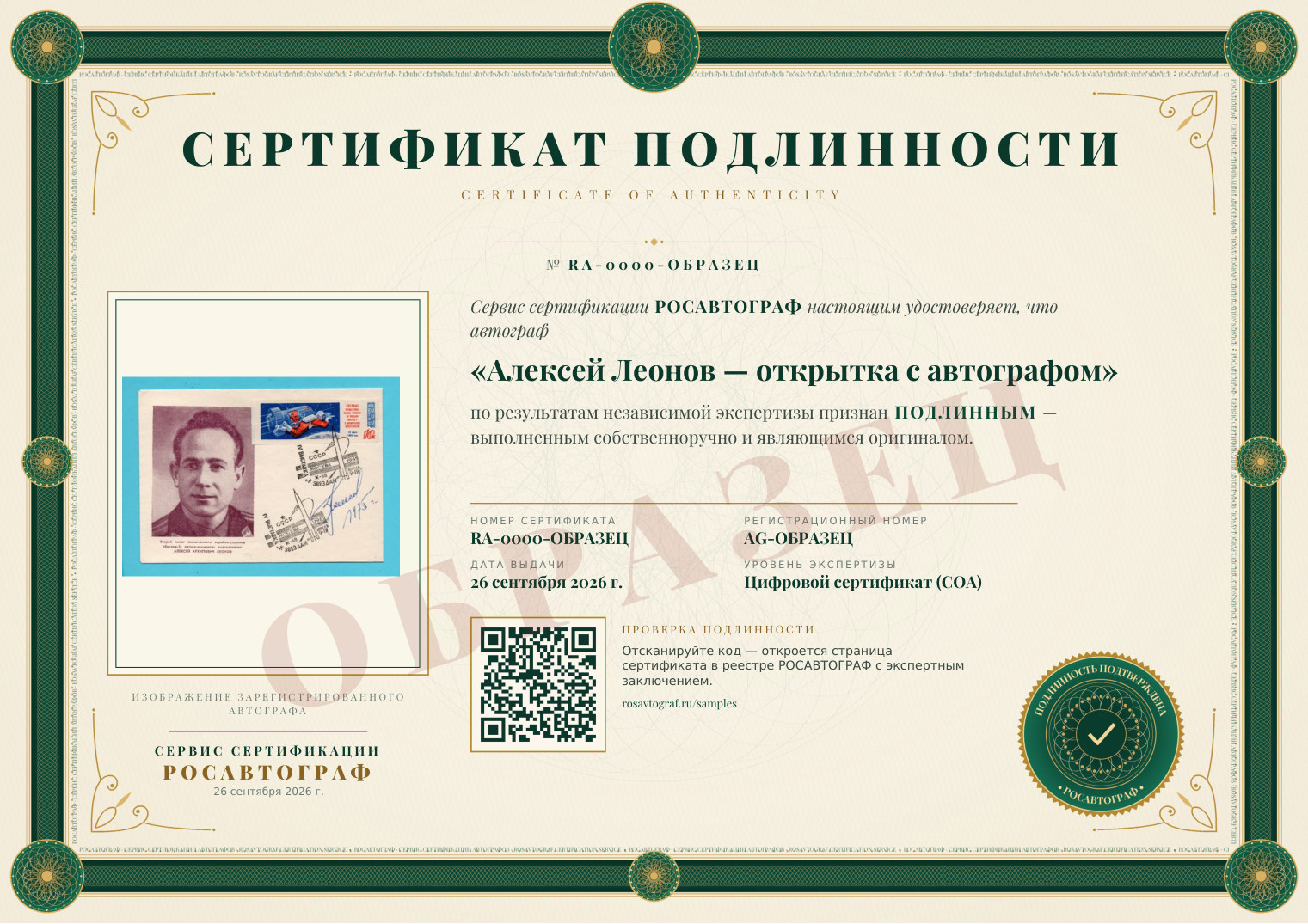
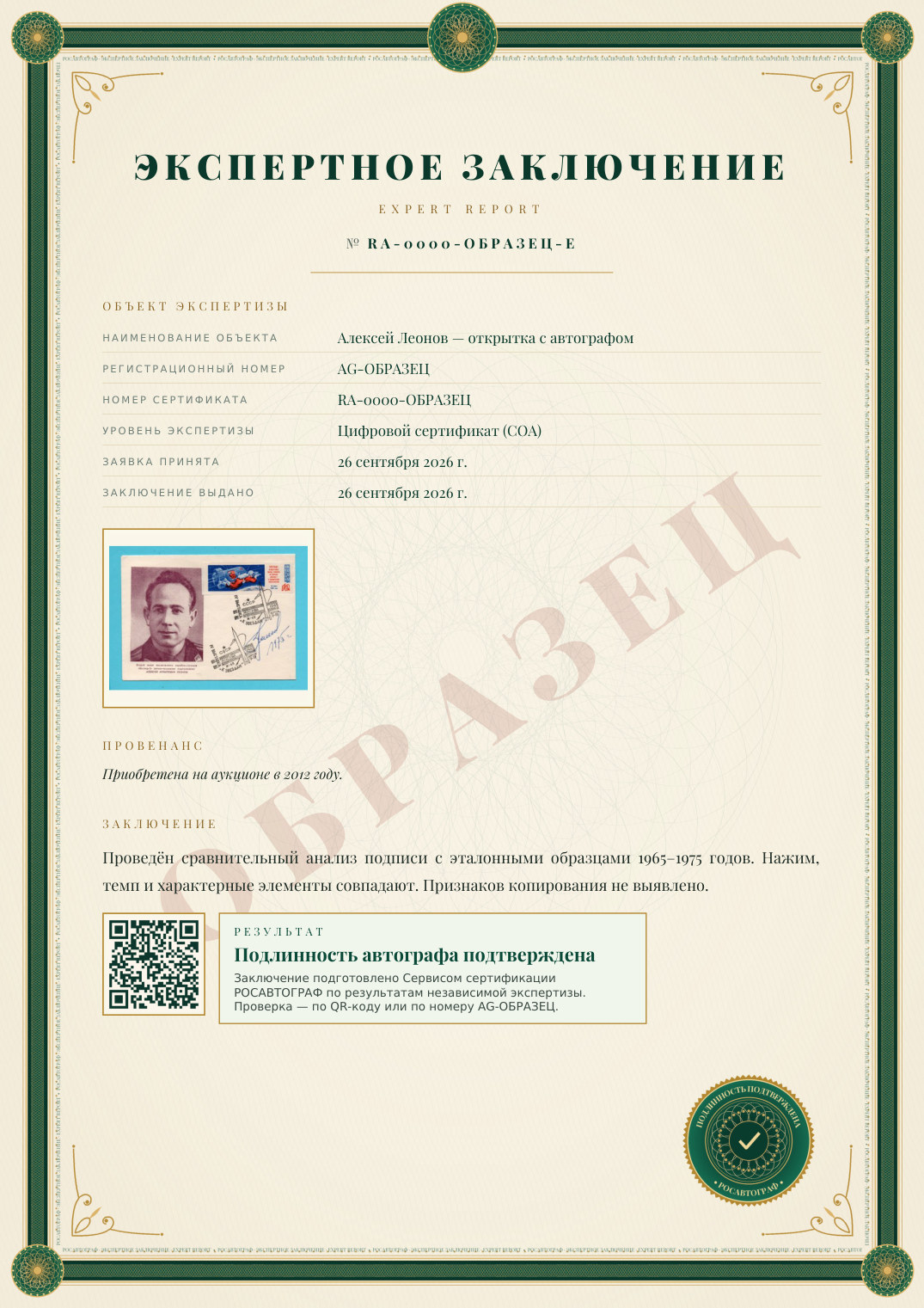
Samples are marked “SAMPLE”. Real documents carry your autograph, a unique number and a QR code leading to the registry entry.
Ready to confirm your autograph’s authenticity?
Registration takes a few minutes — the appraisal starts right after you submit a request.
Get started →